For Immediate Release: October 16, 2026
Contact:
Theresa Barbour, Oregon Wild Horse Organization, (541) 315-6650 tjbarbour.owho@gmail.com
Erik Molvar, Western Watersheds Project, (307) 399-7910, emolvar@westernwatersheds.org
Gayle Hunt, Central Oregon Wild Horse Coalition, gdhunt@gmail.com
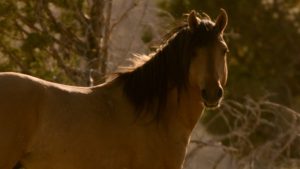
EUGENE, Ore. – Last night, a federal judge issued a Preliminary Injunction blocking an emergency roundup that would have removed 100 percent of the Riddle Mountain wild horse herd from its wild horse Herd Management Area southeast of Burns, Oregon, confine them to holding pens for at least two years, and after this period return a maximum of 33 wild horses to their original habitats. Conservation and wild horse groups bringing the legal challenge hailed the ruling as a victory for the wild horses and for science-based management on public lands.
“We are delighted that the Bureau of Land Management’s hastily-contrived ‘emergency’ roundup of the Riddle Mountain wild horses, which will give these animals the opportunity to live their best lives out in their natural habitats, instead of being confined to holding pens for years with the likelihood of inbreeding and genetic bottlenecks to follow,” said Theresa Barbour of Oregon Wild Horse Organization. “It’s great to see the judge cut through the excuses and bureaucratic smokescreens the BLM throws up to justify its arbitrary suppression of wild horse populations, and apply a rigorous lens to the facts and the law surrounding wild horse management in southeastern Oregon. This is a huge victory for the Riddle Mountain horses.”
In her ruling, Judge Immergut pointed to three major legal issues with the emergency roundup, where the groups had shown they are likely to succeed on the merits of the case, which she noted is “the most important factor” in granting an injunction. The judge indicated that the Appropriate Management Level, a BLM population target set by the agency to limit wild horse numbers, was never set according to site-specific analysis. The judge raised concerns that the agency decided to remove the horses before it conducted an Environmental Assessment, in a National Environmental Policy Act violation called “predetermination.” And the judge ruled that there were serious questions regarding whether the agency took a “hard look” at the genetic implications of the roundup.
“The Environmental Assessment for the Kiger-Riddle roundup, and the decision that resulted, fundamentally fails to live up to the legal and scientific standards of federal law, and the judge recognized that,” said Gayle Hunt of the Central Oregon Wild Horse Coalition. “We provided a declaration from a BLM whistleblower that shows the agency issued contracts to conduct the roundup before it ever began its Environmental Assessment process, putting the cart before the proverbial horse. Now the agency’s plan to capture all of the Riddle Mountain wild horses and put them into holding pens has been blocked, a major win for the horses.”
The judge also ruled that the roundup, as planned, would cause irreparable harm to the Riddle Mountain wild horse population, noting expert testimony that “a minimum population of 278 horses is necessary for the Riddle Mountain wild horse population to be genetically viable” according to published science, and that reducing the population to a lesser number (the agency’s AML is only 33-56 horses) would create inbreeding and genetic bottlenecks. In balancing the equities and determining the public interest, the judge pointed out that the BLM relied on ocular estimation, “little more than a guess,” to determine the horses might not have enough forage for the winter, in the wake of the Bald Mountain Fire which burned about half the acreage of the Herd Management Area. The judge concluded that the roundup posed an “imminent threat to the genetic viability of the Riddle Mountain HMA’s wild horse population.”
“Across the West, the Bureau of Land Management neglects to use scientifically rigorous monitoring to determine how much forage is available on public-land grazing allotments, and how much forage is being removed each grazing season by cattle and sheep, so this ruling is a significant shot across the bow for an agency that needs to start doing its due diligence,” said Erik Molvar of Western Watersheds Project. “We hope this case will set a helpful precedent requiring the agency to stop neglecting its due diligence to monitor land-health conditions, and will ultimately require the agency to set wild horse Appropriate Management Levels above the 278-horse threshold required for genetic viability, and tie them to the thriving natural ecological balance required by law rather than an agenda to maximize cattle and sheep numbers on wild horse Herd Management Areas.”
Blocking an “emergency” roundup of wild horses is an extremely difficult feat, because the agency typically hides its planning process from public view, only announcing the roundup a few days before the helicopters are unleashed, leaving too little time for attorneys to brief the cases and judges to hold hearings. In this case, the agency sprang the news of the “emergency” two days before the Labor Day holiday, to frustrate the court’s ability to adjudicate the case. But Judge Immergut worked over the holiday weekend, issuing a Temporary Restraining Order to put a hold on the roundup to allow time for the parties to fully argue the case for an injunction and present expert declarations and testimony.
The lawsuit was brought by two wild horse advocacy organizations, Oregon Wild Horse Organization and Central Oregon Wild Horse Coalition, and Western Watersheds Project, a West-wide conservation group. The plaintiffs were represented by Greenfire Law.
###