Media contacts:
- Greta Anderson, Western Watersheds Project (520) 623-1878, greta@westernwatersheds.org
- Michelle Lute, Wildlife for All (505) 552-2501, michelle@wildlifeforall.us
- Leia Barnett, WildEarth Guardians, (970) 406-2125, lbarnett@wildearthguardians.
org - Claire Musser, Grand Canyon Wolf Recovery Project (928) 202-1325, claire@gcwolfrecovery.org
- Mary Katherine Ray, Rio Grande Chapter Sierra Club, (575) 537-1095, mkrscrim@gmail.com
- Regan Downey, Wolf Conservation Center, (914) 763-2373, regan@nywolf.org
Advocates condemn Mexican gray wolf killings, commend law enforcement efforts
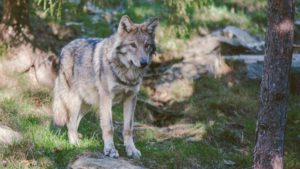
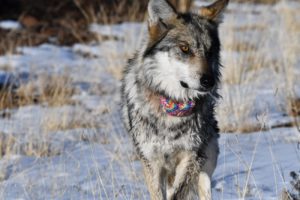
SANTA FE, N.M. – The U.S. Fish and Wildlife Service investigated the deaths of two Mexican wolves and served a federal search warrant in April of this year, according to a report in yesterday’s Albuquerque Journal. The wolves – a five year-old father and a yearling son from the Sawtooth Pack – were caught in private traps on private land in two separate incidents in the spring of 2025.
The article provides details about the extensive search conducted by federal agents at properties near Datil, New Mexico. While New Mexico law prohibits trapping on public lands, livestock producers are permitted to use leg-hold traps on private property, and are often used primarily to target coyotes. The rules for Mexican gray wolves require that a person encountering a dead or injured Mexican gray wolf needs to report the incident to the Service within 24 hours and not disturb the area where the animal was located. Wolves caught in traps are expected to be treated with “due care” to avoid injury or death to a wolf, which constitute take under federal Endangered Species Act (ESA) protections.
The Albuquerque Journal story did not mention any potential penalties that the suspects might be facing, but harming or killing a Mexican gray wolf is a violation of the federal ESA and can result in criminal fines of up to $50,000, up to one year in jail, and civil penalties of up to $25,000 per offense.
“We applaud the diligence of law enforcement officers in pursuing accountability for these wolves’ deaths, and we sincerely hope that the U.S. Attorney’s Office in New Mexico takes the opportunity to demonstrate that one cannot simply kill endangered species with impunity,” said Greta Anderson, deputy director of Western Watersheds Project. “These wolves mattered – to their families, to the species, and to the majority of Americans who want to see wolves recovered.”
“A strong enforcement response to these killings will send a message far beyond this case,” said Michelle Lute, PhD in wolf conservation and executive director of Wildlife for All. “At a time when federal leaders are signaling that laws can be ignored or weakened, it’s especially important that prosecutors and wildlife agencies make clear that endangered species protections remain the law. Accountability is essential to deterring future violations and ensuring that those who would harm wildlife understand there are real consequences.”
“The Mexican gray wolf remains one of the most endangered mammals in North America, and every illegal killing undermines years of recovery work,” said Claire Musser, executive director of the Grand Canyon Wolf Recovery Project. “These wolves were part of a family that was contributing to the species’ future. We applaud federal investigators for their diligence and hope this case demonstrates that endangered species laws carry real weight. Recovery depends not only on releasing wolves into the landscape, but on ensuring that those who unlawfully harm them are held accountable.”
“In addition to being members of a still highly imperiled and protected species, these two wolves were killed with disturbing human brutality and cruelty”, said Mary Katherine Ray, Wildlife Chair for the Rio Grande Chapter of the Sierra Club. “We are very appreciative of the law enforcement agents’ investigation and hope the perpetrator(s) can be brought to justice not only for killing endangered wolves, but also for the heinous way the acts were committed.”
“The deaths of these two wolves are heartbreaking and serve as an important reminder that Mexican wolves still face significant challenges. Saving a species like the Mexican wolf is a true team effort, requiring collaboration from captive breeding facilities, conservation organizations, and wildlife agencies, and we’re heartened to see such a coordinated response in the face of such devastating acts,” said Regan Downey, director of education and advocacy at the Wolf Conservation Center, a participant in the SAFE (Saving Animals From Extinction) Mexican Wolf program.
“The details of these grisly murders demonstrate that, despite the fact that lobos have been an important and iconic part of New Mexican landscapes for millenia, they are still actively and gruesomely persecuted”, said Leia Barnett, New Mexico Conservation Lead for WildEarth Guardians. “The public outcry and formal investigation are proof that wolves are valued as native carnivores and that our bedrock environmental laws like the Endangered Species Act shall not be flouted.”
There is a total of $104,500 being offered in reward for persons providing information leading to the conviction of Mexican wolf killers. Individuals with information they believe may be helpful are urged to call one of the following agencies: USFWS Special Agents in Pinetop, Arizona, at (346) 254-0515.
###
Western Watersheds Project is a nonprofit conservation organization with more than 50,000 members and supporters who care about protecting western public lands for watersheds and wildlife.
The Grand Canyon Wolf Recovery Project is a nonprofit dedicated to bringing backwolves to help restore ecological health in the Grand Canyon region, while alsorecognizing wolves as sentient beings with intrinsic value and worth.
WildEarth Guardians protects and restores the wildlife, wild places, wild rivers, and health of the American West.
Wildlife for All is a national organization dedicated to reforming wildlife management to be more democratic, just, compassionate and focused on protecting wild species and ecosystems. Through research, advocacy, and education, we aim to protect wildlife and ensure that policies reflect the values of all Americans.
The mission of the Sierra Club is to explore, enjoy, and protect the wild places of the earth; to practice and promote the responsible use of the earth’s ecosystems and resources; and to educate and enlist humanity to protect and restore the quality of the natural and human environment.
The Wolf Conservation Center works to advance the survival of wolves by inspiring a global community through education, advocacy, research, and recovery.